
Tag: Peace
-
Photo by David Bartus on Pexels.com -

Photo by Sourav Majumdar on Pexels.com In the vast expanse, my spirit soars,
Seeking new horizons, opening doors.
Expanding my mind, exploring the unknown,
Unleashing the potential I’ve always known.
Like a blooming flower, reaching for the sun,
I strive for growth, my journey’s just begun.
Expanding my knowledge, embracing change,
Breaking through boundaries, I rearrange.
With each new step, my world expands,
Stretching my limits, with open hands.
In every direction, I chart my course,
Embracing expansion, with unwavering force.
From the depths of my being, I expand and grow,
Infinite possibilities, I now know.
In this grand universe, my spirit takes flight,
Expanding within, igniting pure light.
-

Photo by Engin Akyurt on Pexels.com Link: https://on.soundcloud.com/aPw3m
The Emotional Brain is the limbic system, which is the Limbic System of the brain. It is responsible for our emotions, memory, and motivation. The Emotional Brain is located in the middle of the brain, behind the prefrontal cortex. The Emotional Brain is made up of the hippocampus, the amygdala, and the thalamus.
The hippocampus is responsible for our long-term memory. The amygdala is responsible for our emotions, such as fear, anxiety, and anger. The thalamus is responsible for our short-term memory.
The Emotional Brain is in constant communication with the prefrontal cortex, which is responsible for our decision-making. The prefrontal cortex is the most developed part of our brain. It is responsible for our ability to think, reason, and plan. The prefrontal cortex is constantly sending signals to the Emotional Brain.
The aim of Day 27 is to help participants come closer to their true selves. With enhanced insight and an improved relationship with the inner self, we are in pursuit of a life full of love, purpose and joy. To better understand this concept, listen to Day 27 of the 30-Day Chiron Gong Challenge on SoundCloud provided by Julie Jewels Smoot Sound Alchemist.
The Emotional Brain
The Emotional Brain is the part of the brain that is responsible for our emotions and feelings. It is made up of the limbic system, which is made up of the hippocampus, amygdala, and thalamus.
The hippocampus is in charge of our long-term memory and stores our emotions, such as nostalgia and happiness. It is also responsible for our ability to identify and recall faces.
The amygdala is in charge of our short-term memory and controls our emotional reactions, such as fear and anger. The thalamus is responsible for sensory processing and relays sensory information to the cortex.
The Emotional Brain is constantly communicating with the prefrontal cortex, which is the most developed part of our brain. It is responsible for our ability to think, reason, and plan. The prefrontal cortex constantly sends signals to the Emotional Brain, which then influences our emotional responses.
Day 27 – Integrating the Emotional Brain
Day 27 of the 30-Day Chiron Gong Challenge focuses on recovering the emotional brain. This activity intends to awaken the neurons and minds of participants to the power of their emotions.
The challenge includes several activities and tasks that should be completed to maximize the effectiveness of this day. The activities may include activities such as self-reflection, creative visualization, mindful meditation and the use of calming music.
By learning the power of our emotions and integrating them with the brain, we can better control our mental state and appreciate life to its fullest. This day is designed to awaken your senses through understanding and leading to a better understanding of the intersection between emotions and the brain.
Overall, the main goal of day 27 is to bring participants closer to their authentic selves. Through better understanding and connecting to the inner self, we can live life to the fullest surrounded by love, purpose, and happiness.
-

Photo by Andrea Piacquadio on Pexels.com Link: https://on.soundcloud.com/GW1Ck
The emotional brain is a powerful tool that can be used for good or for bad. To use it effectively, we need to understand how it works and what its strengths and weaknesses are.
The emotional brain is responsible for a lot of our decision-making, and it can be easily swayed by our emotions. This is why it’s so important to learn how to control our emotions and use them to our advantage.
In this article, we’ll explore the emotional brain in more depth and look at ways we can use it to our advantage. We’ll also look at some of the dangers of letting our emotions get out of control.Why it’s important to Befriend the emotional brain?
Our emotional brain is an essential part of our lives. It helps us make decisions and rationalize our feelings. We cannot ignore our emotions and expect them to stay contained. The emotional brain needs to be befriended to achieve lasting emotional balance.
By befriending the emotional brain, we can take control of our emotional state and use it to our advantage. We can learn how to regulate our emotions and use them to make constructive decisions. We can learn to channel our emotions so that we can become more productive and efficient.
Additionally, by befriending the emotional brain, we can gain access to knowledge that can make us better people. We can learn about our emotions and the causes behind them, enabling us to develop better coping skills. We can also gain insight into the emotional state of others, enabling us to be more compassionate.
By actively engaging with our emotional brain, we can create a balanced life. We can learn to recognize and manage our emotions, which can enhance our relationships and create better well-being. With practice and dedication, we can become more emotionally intelligent and use emotional intelligence to create a better version of ourselves.
What are the benefits of befriending the emotional brain?When we befriend the emotional brain, we can expect to reap many benefits. We can become more emotionally in tune, more compassionate, and more resilient. Below are some of the benefits of befriending the emotional brain:
• Increased emotional intelligence: Our emotional brain is the source of our emotional intelligence. By engaging with it, we can gain greater insight into our emotions and learn how to manage them.
• Greater self-awareness: Befriending the emotional brain helps us become more mindful of our feelings and thoughts. This allows us to gain a better understanding of ourselves and our motivations.
• Improved relationships: By being more emotionally aware, we are better able to interact with those around us. Our interactions become more meaningful and our relationships improve as a result.
• Enhanced resilience: Through recognizing our emotions and learning to manage them healthily, we become more resilient and better able to cope with life’s challenges.
Overall, befriending the emotional brain allows us to become better, more emotionally balanced individuals. We are better able to understand ourselves and the world around us, improve our relationships, and become more resilient.
Link to my book: THE ART OF CHIRON GONG: A HOLISTIC APPROACH TO HEALING TRAUMA
a.co/d/dH9hjI4 -

Photo by M Venter on Pexels.com Link: https://on.soundcloud.com/YtUNS
Day 25 of the Chiron Gong challenge focuses on getting to know yourself and becoming your true self. It is a day of self-reflection, self-discovery and taking responsibility for your own life. It is a day when you must take off the mask and be honest with yourself.You may choose to practice self-reflection through journaling, mindfulness or meditation. Allow yourself to feel your emotions without attachment and acknowledge how you feel without judgment. Spend the day getting to know yourself – your strengths and weaknesses, your patterns, your beliefs and values. Take some time to consider your current behaviors, habits and lifestyle.
Taking this time for self-reflection and self-assessment will help you to determine if certain behaviors or habits are worth changing or adopting. It will enable you to recognize the importance of living in your truth and embracing your flaws and all.
Spend the day actively getting to know yourself and what makes you unique. This will help you to become more self-aware and understand who you are and what you can offer the world. By living in your truth and staying authentic, you will be able to create a life that works for you and make positive changes when necessary.
Why is it important to get to know yourself?
It is incredibly important to get to know yourself. Doing so can help you to have more clarity in regard to who you are, what you are capable of, and the potential that lies within you. It can help you to assess and recognize your good points along with those areas of yourself that you would like to improve.By getting to know yourself, you can create a clear vision for the life that you want to lead and begin to move towards that. Knowing your true self in this manner enables you to find the courage to become the best version of yourself and to start creating the life that you dream of.
Getting to know yourself can also help you create healthier relationships with others. You can develop a greater level of self-confidence, learn to love and accept yourself and be at peace with who you are. When you are in tune with yourself and your purpose, it can open up doors of opportunity in your pursuits and gain an even greater sense of inner joy and fulfillment.
How can you get to know yourself better?
Getting to know yourself requires a level of honest self-reflection, but it is well worth the effort. Taking time to get to know yourself can involve making observations of what you feel as well as examining your behavior and seeing how it affects yourself and those around you.The following are a few ways to get to know yourself better:
1. Practice Self-Awareness and Mindfulness – Being mindful and aware of your daily life and your inner thoughts is a great way to start having a clearer understanding of yourself. Take time to observe your thoughts, feelings, and reactions in different situations and ask yourself why you feel or react in a certain way.
2. Journaling – Writing down your thoughts, emotions and experiences is a great way to process them and objectively observe your progress. Through journaling, you’ll be able to see your thoughts and emotions more clearly, track patterns and transformations, and better understand yourself and your reality.
3. Connect with Nature – Being out in nature and connecting with it helps you to feel connected to something greater than yourself and observe your true inner self in its purest form.
4. Spend Time Alone – Spending time away from the hustle and bustle of life and being in solitude allows you to turn your attention inward and reflect on yourself.
5. Embrace Your Feelings – Experiencing your entire range of emotions and allowing yourself to feel them without the impulse to change them
Link to my book: THE ART OF CHIRON GONG: A HOLISTIC APPROACH TO HEALING TRAUMA
a.co/d/dH9hjI4 -

Photo by Lucas Pezeta on Pexels.com Link: https://on.soundcloud.com/8BZPv
Somatic movement is a form of self-care that emphasizes the importance of being aware of and connecting with your body. The goal is to improve your quality of life by moving your body in ways that are beneficial to your physical, mental, and emotional health.
There are many different types of somatic movement, and you can tailor your practice to fit your needs and preferences. Some common practices include Nia Technique, yoga, Pilates, Tai Chi, and Qigong.
Somatic movement can be an effective tool for managing stress, reducing pain, and improving your overall health and well-being. If you are looking for a way to improve your quality of life, somatic movement is a great place to start!What is Somatic Movement?
A somatic movement is an approach to the body that focuses on promoting awareness, flexibility and well-being. It is a form of self-care that emphasizes the importance of connecting with your body and moving in ways that are beneficial to your physical, mental, and emotional health.
Somatic movement involves both stretching and mindful movement practices, such as yoga, Pilates, and Qi Gong. Practices such as this help to increase the body’s awareness of its position, its breath, and its muscles’ flexibility and power.
The main principle of somatic movement is to increase the body’s relevance in our lives – to recognize its importance and use it as a means to improve our physical and mental well-being. This sense of embodiment is essential for overall health, as it helps us to recognize and respond appropriately to our physical condition, environment and emotions.
Somatic movement can help to improve posture, relieve pain, reduce stress, and increase energy levels. It can be an effective tool in managing mental health issues and provides individuals with an opportunity to explore their physical, mental and inner selves in relationship to their environment.
The purpose of the 30-Day Chiron Gong Challenge
The 30-Day Chiron Gong Challenge is designed to help practitioners develop greater awareness and presence of self in their own body, while also expanding their ability to move in ways that enhance their self-awareness and physical and mental health. This challenge is all about exploring the power of somatic movement, and it offers an opportunity to reflect on and experiment with a wide range of movement practices.
Incorporating the Chiron Gong into the challenge adds an extra layer of healing, as the gong is an ancient healing tool that can help rejuvenate and enhance the body’s vitality. The vibration of the gong helps cultivate a deep awareness of one’s physical and mental body, while the sound of the gong opens up space for powerful meditations and reflections that can support progress in the challenge.
By uniting mind, body, and spirit through conscious movement, guided meditation, and sound healing during the challenge, individuals can gain a greater understanding of what it means to be in full awareness of their bodies and minds as well as the connection to the environment and their surroundings. Through the 30-Day Chiron Gong challenge, practitioners can gain invaluable insight into the benefits and power of somatic movement.
-

Photo by lil artsy on Pexels.com Link: https://on.soundcloud.com/1V1AW
Today’s challenge is to write a letter to yourself. This letter can be about anything you want – your hopes, your fears, your aspirations. It’s a chance to get everything off your chest and express yourself in a safe and nurturing way.
Writing a letter to yourself is a great way to get in touch with your innermost thoughts and feelings. It can also be a helpful tool for dealing with difficult emotions and challenging situations. If you’re struggling to get started, try answering the following questions:
-What are the things that you’re most proud of?
-What are the things that you’re most scared of?
– What are your hopes and dreams for the future?
Take some time to think about your answers. Once you’ve written down your thoughts, put the letter away somewhere safe and come back to it whenever you need a reminder of your strength and resilience. When you re read make sure that you read it out loud so that you hear your words.
-
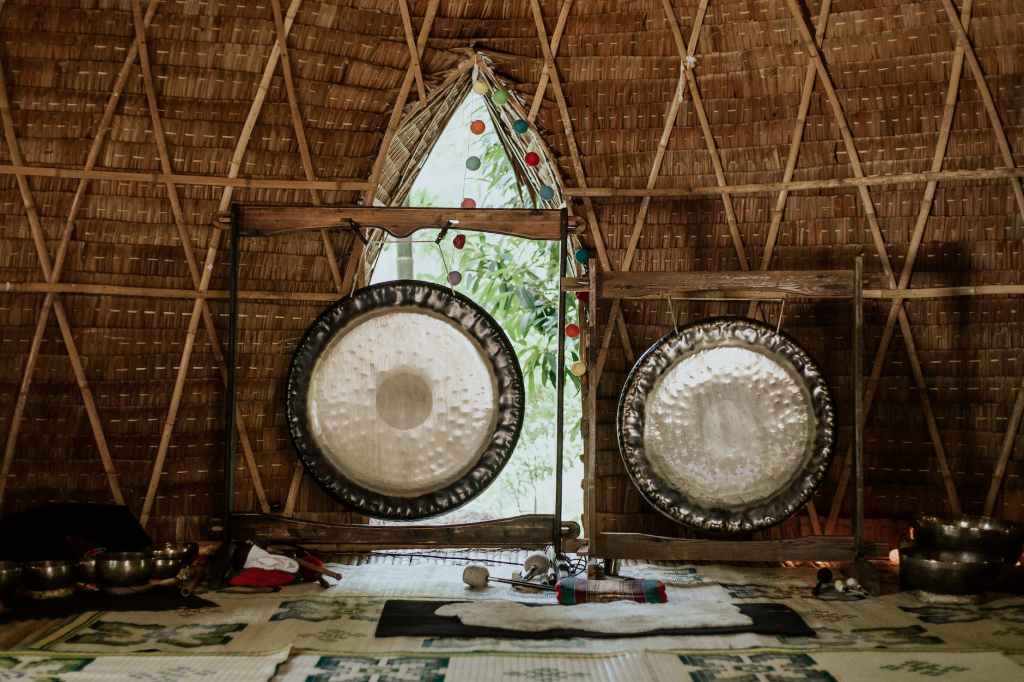
Photo by cottonbro studio on Pexels.com Link: https://on.soundcloud.com/smyBY
Chiron gong is a tool that can be used to help integrate trauma within the body. It is a 30-day process that uses sound as a way to help release and clear energetic blockages. This process can be done with or without a partner.
The gong is played for 30 minutes a day, for 30 days. The first 10 minutes are spent setting the intention for the session. The next 20 minutes are spent allowing the vibration of the gong to wash over the body. The final 10 minutes are spent setting the intention to integrate the experience.
Chiron gong can be used by anyone interested in clearing energetic blockages and/or trauma from their body. It is a safe and effective way to help the body heal itself.What is the Chiron Gong?
The Chiron gong is an instrument that is used in the process of healing, specifically designed to help move blocked energy or trauma from the body. The gong utilizes sound waves to stimulate the body’s natural electrical field and help it to return to balance. The gong can be used as a tool for self-healing, or with a partner.
The gong is a metal instrument that is tuned to the frequency of a particular note, usually in the key of D #. The metal’s vibration is then used to create a resonance in the body which helps to create a healing effect. The resonance of the gong helps to move blocked energy and rebalance the body. The sound waves will travel throughout the body and can be used to help realign energy channels and clear trauma from the body.
The Chiron gong is a powerful healing tool that can be used for a variety of healing applications. It is safe and effective and can be used by anyone interested in healing and clearing energetic blockages and trauma from their body.
-

Photo by Linda Prebreza on Pexels.com Link: https://on.soundcloud.com/T16by
Link to my book: THE ART OF CHIRON GONG: A HOLISTIC APPROACH TO HEALING TRAUMA
a.co/d/dH9hjI4The Chiron Gong challenge is a great way to get to know your body and improve your health. On day 8 of the challenge, you will focus on getting to know your body with touch. This will involve using your hands to massage your body and using touch to stimulate your pressure points.
Touch is a powerful tool that can be used to heal the body. It is a form of communication that can be used to relax the mind and body and increase circulation and decrease pain. Touch can also be used to diagnose illness and to find areas of the body that need attention.
The Chiron Gong challenge is a great way to get to know your body and improve your health. On day 8 of the challenge, you will focus on getting to know your body with your touch and listening to the sounds of Chiron Gong for twenty minutes.
-

Photo by Iren Fedo on Pexels.com Link: https://on.soundcloud.com/NNn3g
On day 10 of the Chiron Gong Challenge, we continue to nurture the warrior within us. The Chiron Gong is a powerful tool that can help us to access our inner strength and power. By using the Chiron Gong daily, we can connect with our higher selves and allow our true nature to shine through.
The Chiron Gong Challenge is a 30-day challenge that is designed to help us connect with our inner warrior. By taking on this challenge, we can learn how to access our strength and power and use it to create positive change in our lives.
What does it mean to be a warrior?
The concept of the warrior has been around for centuries, and it stands for strength, courage and mental fortitude. To be a warrior means to be brave in the face of adversity and danger. A warrior is someone who stands their ground and is willing to fight for what is right and just.Being a warrior means having the courage to take on life’s challenges and never give up, no matter how difficult the situation. It means having the strength to persevere and the ability to overcome obstacles. It also means being resourceful and having the ability to think calmly and rationally in the face of overwhelming odds.
The Chiron Gong Challenge encourages each of us to connect with our inner warrior and to use this power in our daily lives. From learning how to stand up for us to finding the courage and strength to tackle life’s problems, this challenge helps us nurture our inner strength and become true warriors.
Link to my book: THE ART OF CHIRON GONG: A HOLISTIC APPROACH TO HEALING TRAUMA
 The Harmonious Sound Journey