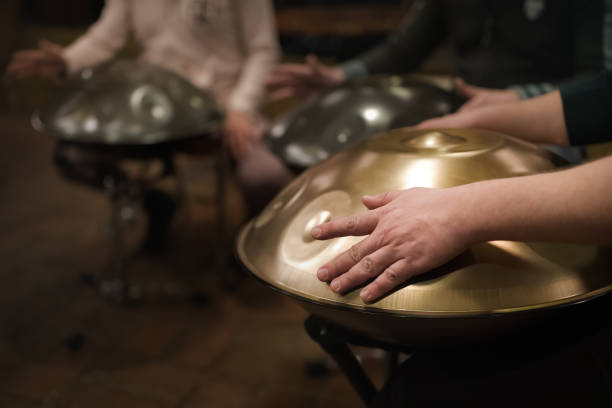
In the midst of the chaos and suffering that Post Traumatic Stress (PTS) can bring, one Navy Veteran and Sound Alchemist has discovered a remarkable source of healing: hand pans. Julie Jewels Smoot shares her personal journey of how these enchanting musical instruments have transformed her life and helped her find solace from the wounds of war. In this blog, we will delve into the power of hand pans as a healing tonic for PTS, exploring the role of breath, compassion, and self-healing in this transformative process. Join us as we unveil the true power that hand pans hold for those struggling with PTS.
Understanding Post Traumatic Stress and its Impact on Mental Health
In order to fully comprehend the healing power of handpans for those with Post Traumatic Stress (PTS), it is vital to understand the impact that this condition has on mental health. Post Traumatic Stress is a complex disorder that can arise after experiencing or witnessing a traumatic event. Its effects can manifest in various ways, including intrusive memories, nightmares, anxiety, hypervigilance, and emotional numbness.
For individuals with PTS, the daily struggle to manage these symptoms can be overwhelming and exhausting. However, the healing tonic of handpans offers a unique approach to addressing the deep-rooted wounds caused by trauma. By providing a safe and gentle outlet for emotional expression, handpans allow individuals with PTS to navigate their healing journey in a way that traditional therapies may not be able to fully address.
In the next section, we will explore the therapeutic benefits of handpans and how they can alleviate the burdens of PTS, helping individuals find hope, resilience, and ultimately, a path towards healing.
Stay tuned for more as we continue to unveil the true power that hand pans hold for those struggling with PTS.

The Rise of Hand pans: A Musical Therapy Alternative
As awareness grows about the healing power of hand pans, more and more individuals with Post Traumatic Stress (PTS) are turning to this unique musical therapy alternative. Hand pans, a relatively new instrument, have gained popularity in recent years for their ability to create soothing and melodic tones that resonate with the soul.
Traditional therapies, while effective for many, may not always fully address the unique needs of individuals with PTS. Handpans offer a different approach, providing a safe space for emotional expression and release. The gentle vibrations created by the instrument have a calming effect on the nervous system, helping to reduce anxiety and promote relaxation.
Furthermore, the rhythmic nature of playing a handpan can help regulate breathing and heart rate, enabling individuals to enter a state of deep relaxation and mindfulness. This sense of grounding and presence can be particularly beneficial for those experiencing flashbacks or intrusive memories associated with their trauma.
In the following section, we will delve into the specific therapeutic benefits of hand pans and how they can empower individuals with PTS to take control of their healing journey.

Unleashing the Healing Power of Hand pans for PTSD
Hand pans have proved to be an incredible tool for individuals suffering from Post Traumatic Stress Disorder (PTSD). The unique combination of soothing tones and gentle vibrations that emanate from these instruments has the power to create a safe and healing space for emotional release and expression.
One of the key therapeutic benefits of handpans is their ability to regulate breathing and heart rate. As individuals engage with the rhythmic nature of playing a handpan, they enter a state of deep relaxation and mindfulness. This grounded and present state can be especially beneficial for those experiencing flashbacks or intrusive memories associated with their trauma.
Additionally, the calming effect of handpans on the nervous system helps to reduce anxiety and promote overall relaxation. This can be particularly powerful for individuals navigating the challenges of healing from PTSD.
In the next section, we will explore real-life stories and testimonies from individuals who have found solace and healing through the power of handpans in their PTSD journey. Stay tuned as we shine a light on the transformative impact of this remarkable instrument.

Case Studies: Real-life Stories of Hand pans Transforming Lives
In this section, we will delve into the transformative impact of hand pans on individuals who have experienced the debilitating effects of PTSD. Their stories serve as a testament to the true power that these instruments hold in healing emotional wounds.
Case Study 1: Sarah – Finding Peace and Serenity
Sarah, a military veteran, had been struggling with recurring nightmares and hypervigilance since returning from active duty. After discovering handpans, she found solace in their gentle tones and vibrations. Through regular practice and incorporating handpan music into her daily routine, Sarah gradually experienced a reduction in her traumatic flashbacks. The soothing melodies acted as a catalyst for relaxation and allowed her to regain a sense of inner peace and serenity.
Case Study 2: David – Overcoming Anxiety and Restlessness
David had been living with PTSD for years after surviving a natural disaster. He often felt overwhelmed by anxiety and restlessness, which made it difficult for him to engage in everyday activities. However, upon discovering handpans, David noticed a significant improvement in his symptoms. The calming effect of the instrument’s tones helped to regulate his breathing and alleviate anxiety. Playing the handpan became a valuable tool for him to find moments of tranquility in his daily life.
These are just a few examples of the many stories of individuals whose lives have been transformed by the healing power of handpans. In the next section, we will dive deeper into the scientific explanation behind these therapeutic benefits and explore the potential of handpans in professional PTSD treatment approaches. Stay tuned for an enlightening exploration of the science behind handpans and their role in PTSD recovery.
Integrating Handpans into a Holistic Approach for Treatment
In this section, we will discuss the potential of integrating handpans into a holistic approach for the treatment of Post Traumatic Stress Disorder (PTSD). The captivating sounds and vibrations of handpans have shown great promise in assisting individuals on their healing journey.
Research has indicated that music therapy can be an effective adjunct treatment for PTSD. The mesmerizing tones produced by handpans have the ability to engage the senses and create a calming effect on the nervous system. This can help individuals with PTSD to regulate their emotions, reduce anxiety, and improve overall well-being.
When handpans are combined with other therapeutic modalities such as talk therapy, mindfulness practices, and relaxation techniques, the potential for healing is amplified. The harmonizing qualities of handpan music can complement these approaches by providing a soothing and grounding experience for individuals as they navigate their trauma.
Additionally, the tactile nature of playing a handpan can promote a sense of agency and empowerment, allowing individuals to actively participate in their own healing process. Whether through playing or simply listening to handpan music, it can serve as a powerful tool for processing emotions, promoting self-expression, and fostering a connection to the present moment.
As we uncover more about the science and potential of handpans in PTSD treatment, it becomes increasingly clear that they have the capacity to enhance the therapeutic experience and support individuals on their path to healing. In the next section, we will explore the different ways in which hand pans are being integrated into professional PTSD treatment methodologies. Stay tuned for an insightful exploration of the diverse applications of hand pans in the field of trauma healing.
Collaboration and Research: Advancing the Field of Music Therapy for PTSD
In recent years, there has been a growing interest in the potential of handpans as a therapeutic tool for Post Traumatic Stress Disorder (PTSD). However, in order to fully harness the power of handpans in PTSD treatment, collaboration and research are essential.
Music therapists, psychologists, and other healthcare professionals have begun collaborating to explore the integration of handpans into existing PTSD treatment methodologies. Through case studies and empirical research, they are striving to gather data and evidence on the effectiveness of handpans in promoting healing and reducing symptoms.
These collaborative efforts are crucial for advancing the field of music therapy for PTSD. By sharing best practices, documenting successful interventions, and conducting rigorous studies, professionals can establish a solid foundation for incorporating handpans into clinical practice.
The ongoing research will not only enhance our understanding of handpans’ therapeutic benefits but also provide guidance to clinicians and music therapists on how to effectively incorporate handpans into treatment plans. This will help ensure that handpans are used in a targeted and evidence-based manner to support individuals in their healing process.
In the next section, we will delve into some of the notable research studies and collaborations that are currently shaping the field of music therapy for PTSD. Stay tuned to discover the exciting advancements that are unfolding in this promising area of therapeutic intervention.
Embracing the Potential of Hand pans for Healing and Recovery
In conclusion, the potential of handpans as a healing tool for individuals with Post Traumatic Stress Disorder (PTSD) cannot be underestimated. The ongoing collaborations and research studies in the field of music therapy are shedding light on the true power that handpans hold for promoting healing and recovery.
By effectively integrating handpans into existing PTSD treatment methodologies, professionals are paving the way for a targeted and evidence-based approach to therapy. The sharing of best practices, documentation of successful interventions, and conducting of rigorous studies will establish a solid foundation for the use of handpans in clinical practice.
As we continue to delve into the notable research studies and collaborations in the next section, we will be able to witness the exciting advancements that are unfolding in this promising area of therapeutic intervention. Stay tuned to discover how hand pans are transforming the lives of individuals affected by PTSD.
 The Harmonious Sound Journey